
March 22nd and 23rd 2027
Following the phenomenal success of our debut live event, the Emotional Wellbeing in Dogs Conference is back for 2027 — designed to inspire on every level for anyone sharing their lives with dogs.
This two‑day experience brings together leading voices in dog behaviour, welfare and emotional wellbeing for an unforgettable programme of learning and networking. Expect powerful talks, practical insights you can use immediately in your work, and an immersive format designed to spark meaningful conversations.
Join us for two days that will elevate your understanding of dogs and energise you in your work as you connect with others who share your passion for emotionally focussed care.
We are delighted to welcome Karin Pienaar and Dr Karolina Westlund for their first UK presentations, alongside returning speakers Dr Robert Falconer-Taylor, Dr Amber Batson and Sarah Whiffen.
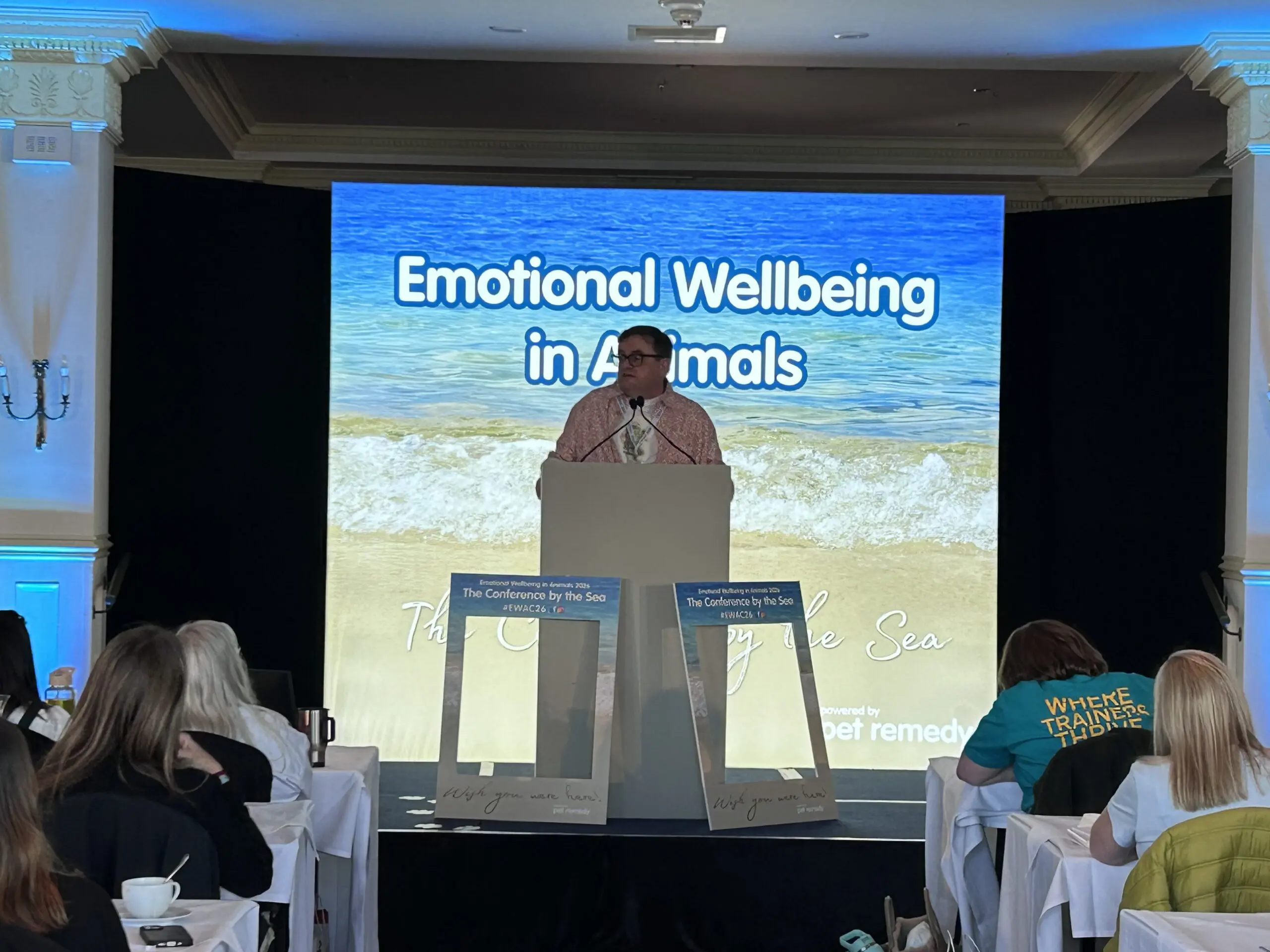

The conference will be held at the 4-star Imperial Hotel in Torquay, Devon. With stunning views across Torbay, the hotel is just a short walk from Torquay Harbour and the town centre.
Imperial Hotel WebsiteAfter listening to delegate feedback from last year, we’re introducing a more flexible ticket option for 2027. All tickets will now be available without accommodation included, giving every attendee the freedom to choose a stay that suits their needs, preferences and budget. Also, tickets will include the Gala Dinner for everyone attending the conference so all can enjoy this special social event.
For those who’d like to remain at the Imperial and enjoy its fantastic location, rooms are currently available from just £60 on booking.com — making it an easy and affordable choice for the full conference experience. You can also choose from a wide range of hotels, Premier Inns, Travelodges and Airbnb properties within walking distance of the venue. Further accommodation and local area information can be found at:
https://www.englishriviera.co.uk/accommodation
Accessibility
The conference venue is fully accessible and the hotel has limited
accessible rooms available.
JOIN US – BOOK TODAY
EWAC27 Ticket
Ticket includes:
- Pre event on the Sunday 21st including welcome drink.
- Access to 2 days of brilliant learning (speaker details below).
- Lunch both days with teas/coffees during the 2 days.
- 3 course Gala Dinner on Monday evening for all delegates with entertainment
EARLY BIRD SPECIAL £295!
Early bird price available until end of September – Normal price £345
£100 deposit with full payment required by 30th September 2026
BOOK TICKETS
THIS YEARS SPEAKERS
Karin Pienaar from MHERA– First time presenting in the UK
Dr Karolina Westlund – First time presenting in the UK
Dr Robert Falconer-Taylor – Returning for a second year
Dr Amber Batson – Returning for a second year
Sarah Whiffen – Returning for a second year to talk about ACE
Jane Arden
Aneesha Ghuman
Tracey Jones-Hughes
Roz Pooley
Matt Donovan
Jack Linnell – St Giles Animal Welfare

Karin Pienaar
First time presenting in the UK
When dogs bark excessively, jump up on or hump people, chexerw destructively or are excessively mouthy, these behaviors are often called ‘problems’ because they disrupt the human/dog relationship. Trainers are often called in to train these behaviors ‘out’ of dogs by using management strategies and training plans that include managing or avoiding situations where these behaviors occur and teaching alternatives.
But as annoying and frustrating as these behaviors might be for people, they are windows into the dog’s world. They make sense to dogs and by minimizing or inhibiting their practice, this can lead to regression and resurgence.
Trusting ‘The Why’ of a behavior can help trainers and guardians find more meaningful and effective solutions that might not always put the focus on the problem behavior itself, but looks at the broader picture. Zooming out and looking at the whole dog not only exposes information that better understands the dog’s Why but allows trainers to develop simple solutions that can address certain behaviors while still taking the dog’s needs and well-being into account.
Using real-world case studies, attendees will:
· Learn how to find and explore the dog’s ‘Why’
· Discover effective ways to think outside the box and problem solve
· Understand how zooming out and seeing the whole dog can better inform their management and training plans
· Work through real-world case studies and see how first impressions and initial judgments might be misleading
· Take their knowledge and abilities to new levels by perfecting interviewing and observation skills
· Think through ‘problem’ behaviors and develop common sense solutions
BIO:
Victoria Stilwell is a world-renowned dog trainer best known as the creator and host of the international hit TV series It’s Me or the Dog as well as The Dog Academy (Channel 4), Greatest American Dog (CBS), Dogs Might Fly (Sky TV), Dogs with Extraordinary Jobs (Smithsonian Channel and Channel 5), Help My Dog is Out of Control (BBC One), and various featured web series including Arson Dogs, Guardians of the Night and Unsung Heroes. Having filmed over 150 episodes of It’s Me or the Dog since 2005, Stilwell reaches TV audiences with her philosophy of positive training methods in over 135 countries, while the show’s popular YouTube, Facebook and TikTok channels inspire new generations of dog lovers. A best-selling author of 5 books including her latest, The Ultimate Guide to Raising A Puppy, Stilwell appears frequently in the media and is widely recognized as a leader in the field of animal behavior.
A passionate advocate for positive dog training methods, Stilwell is the Editor-in-Chief of Positively.com, the founder of the Victoria Stilwell Academy for Dog Training & Behavior, and the CEO of Victoria Stilwell Positively Dog Training – the world’s premier global network of positive dog trainers. Stilwell is the recipient of multiple awards and is committed to helping the cause of animal rescue and rehabilitation and is heavily involved with organizations around the world to increase awareness of puppy mills, dogfighting, animal abuse, pet overpopulation, dog bite prevention and other animal-related causes, but she is best known as a champion for humane positive reinforcement dog training methods. She is an Ambassador for the RSPCA, International Ambassador for the Soi Dog Foundation and serves on the Advisory Boards of RedRover, The Grey Muzzle Foundation, and DogTV. She is also a board member with The Georgia Pet Coalition and Animal Protection Society.content.
Dr Karolina Westlund
First time presenting in the UK
This talk explores why emotional wellbeing is a critical yet often overlooked factor for dogs caught up in the legal system. Daniel will examine how stress, loss of predictability, reduced agency, and disrupted social bonds can profoundly alter a dog’s behaviour and coping capacity. He will discuss how seizure, kennelling, and formal assessment can offer valuable insights into a dog’s behavioural profile when carried out thoughtfully, while also explaining why these contexts can be misleading when emotional wellbeing is not considered. The session will explore how balancing public protection with the emotional needs of dogs leads to more accurate, humane, and evidence based decisions in both legal and welfare settings.
BIO:
Daniel Shaw MSc, CDBC is an experienced animal behaviourist with extensive experiencing supporting dogs and cats with behavioural difficulties. As the owner of Animal Behaviour Kent (ABK), Daniel works with dogs and cats facing serious behavioural challenges, provides expert witness assessments for legal cases under the Dangerous Dogs Act, and has contributed to Parliamentary discussions on dog bite reform. With a master’s degree in neuroscience and background in psychology, Daniel bridges the gap between cutting-edge research and real-world applications, offering science-backed training programmes that help both pets and their owners. His work has been featured on BBC Southeast Today, TalkTV, and LBC News, and he regularly teaches internationally on aggression, frustration, and trauma in dogs. Daniel previously ran the annual ABK Dog Behaviour Conference and runs the Brain and Behaviour Academy, a platform offering accessible, science-based education in animal behaviour, training, and neuroscience.
Dr Robert Falconer-Taylor
Returning for a second year
BIO:
Robert has worked in the veterinary profession for nearly 30 years, as a partner in an innovative small animal hospital group and as a locum. Alongside his role in day-to-day clinical medicine, Robert has also been very much involved in the management, communication, and education side of veterinary practice. During this time, he was directly involved in the conception and implementation of computerisation into the profession. This included a cross-fertilisation with the human healthcare system in the UK and the development of cross-platform coding and classification systems for disease identification, tracking and surveillance. This is now an integral part of the World Health Organisation’s One Health initiative.
Robert was also veterinary director and head of education of the Centre of Applied Pet Ethology (COAPE), the first organisation in the UK to develop government-regulated courses to degree level specifically in companion animal behaviour and training. COAPE also developed the renowned EMRA system used by behaviourists and trainers all over the world, now summarised in their book – EMRA Intelligence: The revolutionary new approach to treating behaviour problems in dogs.
He teaches and consults around the world along with writing for the veterinary and other professional press. He is also author of the informative PET CPD Blog, published on this website, which has been taken up and endorsed by many training and behaviour organisations all over the world.
Robert is also Academic Advisor to The Association of INTODogs and a Trustee for Springer Rescue for Scotland.
His current primary academic interests include companion animal cognitive science and emotionality, nutrition and its effects on behaviour, and applied neurophysiology, pharmacology, and therapeutics in companion animal behaviour therapy. For launch in 2023 – 2024, Robert is working on a number of tools, resources and a book, as part of a range of accessible online education resources for the companion animal community.
Dr Amber Batson
Returning for a second year
This presentation will consider how physical health (including disease and injury) impact wellbeing whilst also considering the effect that emotional wellbeing has on perception and progression of disease / injury and health.
How can we make wellbeing assessments patient specific?
What do the most up to date welfare models do or not do, to help support this multi modal approach to health and a life lived in wellness
BIO:
Amber Batson graduated from the Royal Veterinary College, London in 1999.
She started working in general veterinary practice straight from graduating then quickly became aware that many consultations involved elements of behaviour, which set her on a path of acquiring science-based behaviour knowledge.
For many years she worked in practice whilst undertaking a number of behaviour qualifications in dogs, horses and cats which became blended in with her veterinary work.
In 2007 she set up her own business, Understand Animals, with the aim to bridge the gap between up to date science and using that in a practical way to benefit animals and the humans they share their lives with. Alongside working in clinical vet practice, her business provides education across the globe regards animal behaviour and welfare, as well as providing vet behaviour consultations for clients and legal expert witness work.
Amber remains passionate about using science to support a pragmatic and empathetic approach to behaviour and physical issues in animals.
Jane Arden
Emotional Wellbeing for working dogs
BIO:
Robert has worked in the veterinary profession for nearly 30 years, as a partner in an innovative small animal hospital group and as a locum. Alongside his role in day-to-day clinical medicine, Robert has also been very much involved in the management, communication, and education side of veterinary practice. During this time, he was directly involved in the conception and implementation of computerisation into the profession. This included a cross-fertilisation with the human healthcare system in the UK and the development of cross-platform coding and classification systems for disease identification, tracking and surveillance. This is now an integral part of the World Health Organisation’s One Health initiative.
Robert was also veterinary director and head of education of the Centre of Applied Pet Ethology (COAPE), the first organisation in the UK to develop government-regulated courses to degree level specifically in companion animal behaviour and training. COAPE also developed the renowned EMRA system used by behaviourists and trainers all over the world, now summarised in their book – EMRA Intelligence: The revolutionary new approach to treating behaviour problems in dogs.
He teaches and consults around the world along with writing for the veterinary and other professional press. He is also author of the informative PET CPD Blog, published on this website, which has been taken up and endorsed by many training and behaviour organisations all over the world.
Robert is also Academic Advisor to The Association of INTODogs and a Trustee for Springer Rescue for Scotland.
His current primary academic interests include companion animal cognitive science and emotionality, nutrition and its effects on behaviour, and applied neurophysiology, pharmacology, and therapeutics in companion animal behaviour therapy. For launch in 2023 – 2024, Robert is working on a number of tools, resources and a book, as part of a range of accessible online education resources for the companion animal community.
Aneesha Ghuman
Nutrition
BIO:
Robert has worked in the veterinary profession for nearly 30 years, as a partner in an innovative small animal hospital group and as a locum. Alongside his role in day-to-day clinical medicine, Robert has also been very much involved in the management, communication, and education side of veterinary practice. During this time, he was directly involved in the conception and implementation of computerisation into the profession. This included a cross-fertilisation with the human healthcare system in the UK and the development of cross-platform coding and classification systems for disease identification, tracking and surveillance. This is now an integral part of the World Health Organisation’s One Health initiative.
Robert was also veterinary director and head of education of the Centre of Applied Pet Ethology (COAPE), the first organisation in the UK to develop government-regulated courses to degree level specifically in companion animal behaviour and training. COAPE also developed the renowned EMRA system used by behaviourists and trainers all over the world, now summarised in their book – EMRA Intelligence: The revolutionary new approach to treating behaviour problems in dogs.
He teaches and consults around the world along with writing for the veterinary and other professional press. He is also author of the informative PET CPD Blog, published on this website, which has been taken up and endorsed by many training and behaviour organisations all over the world.
Robert is also Academic Advisor to The Association of INTODogs and a Trustee for Springer Rescue for Scotland.
His current primary academic interests include companion animal cognitive science and emotionality, nutrition and its effects on behaviour, and applied neurophysiology, pharmacology, and therapeutics in companion animal behaviour therapy. For launch in 2023 – 2024, Robert is working on a number of tools, resources and a book, as part of a range of accessible online education resources for the companion animal community.
Tracey Jones-Hughes
Movement and posture
BIO:
Robert has worked in the veterinary profession for nearly 30 years, as a partner in an innovative small animal hospital group and as a locum. Alongside his role in day-to-day clinical medicine, Robert has also been very much involved in the management, communication, and education side of veterinary practice. During this time, he was directly involved in the conception and implementation of computerisation into the profession. This included a cross-fertilisation with the human healthcare system in the UK and the development of cross-platform coding and classification systems for disease identification, tracking and surveillance. This is now an integral part of the World Health Organisation’s One Health initiative.
Robert was also veterinary director and head of education of the Centre of Applied Pet Ethology (COAPE), the first organisation in the UK to develop government-regulated courses to degree level specifically in companion animal behaviour and training. COAPE also developed the renowned EMRA system used by behaviourists and trainers all over the world, now summarised in their book – EMRA Intelligence: The revolutionary new approach to treating behaviour problems in dogs.
He teaches and consults around the world along with writing for the veterinary and other professional press. He is also author of the informative PET CPD Blog, published on this website, which has been taken up and endorsed by many training and behaviour organisations all over the world.
Robert is also Academic Advisor to The Association of INTODogs and a Trustee for Springer Rescue for Scotland.
His current primary academic interests include companion animal cognitive science and emotionality, nutrition and its effects on behaviour, and applied neurophysiology, pharmacology, and therapeutics in companion animal behaviour therapy. For launch in 2023 – 2024, Robert is working on a number of tools, resources and a book, as part of a range of accessible online education resources for the companion animal community.
Matt Donovan
ACE
BIO:
Robert has worked in the veterinary profession for nearly 30 years, as a partner in an innovative small animal hospital group and as a locum. Alongside his role in day-to-day clinical medicine, Robert has also been very much involved in the management, communication, and education side of veterinary practice. During this time, he was directly involved in the conception and implementation of computerisation into the profession. This included a cross-fertilisation with the human healthcare system in the UK and the development of cross-platform coding and classification systems for disease identification, tracking and surveillance. This is now an integral part of the World Health Organisation’s One Health initiative.
Robert was also veterinary director and head of education of the Centre of Applied Pet Ethology (COAPE), the first organisation in the UK to develop government-regulated courses to degree level specifically in companion animal behaviour and training. COAPE also developed the renowned EMRA system used by behaviourists and trainers all over the world, now summarised in their book – EMRA Intelligence: The revolutionary new approach to treating behaviour problems in dogs.
He teaches and consults around the world along with writing for the veterinary and other professional press. He is also author of the informative PET CPD Blog, published on this website, which has been taken up and endorsed by many training and behaviour organisations all over the world.
Robert is also Academic Advisor to The Association of INTODogs and a Trustee for Springer Rescue for Scotland.
His current primary academic interests include companion animal cognitive science and emotionality, nutrition and its effects on behaviour, and applied neurophysiology, pharmacology, and therapeutics in companion animal behaviour therapy. For launch in 2023 – 2024, Robert is working on a number of tools, resources and a book, as part of a range of accessible online education resources for the companion animal community.
Roz Pooley
Working with sensitive dogs to support emotional wellbeing
How do we measure welfare and wellbeing in rescue – Including the differences between the two
– How do they impact on each other? Is one more important than the other?
– What are the challenges to meeting welfare and wellbeing needs of dogs in rescue
– What do we/ can we do to support welfare and wellbeing within rescue – To include case studies and examples here.
– What about the staff/volunteers welfare and wellbeing? Including what are the challenges to this, what is the fallout of poor welfare or wellbeing, and how can we support both.
– A bit about my own experience/ wellbeing challenges and how I try to support myself.
– Why what you do matters, regardless of outcome – This is a bit of a key message I would like to include, as I think it is a vital part of supporting your own well-being, and enabling you to support the animals wellbeing within rescue. Recognising the difference and the impact you make to the individuals lived experience, regardless of outcome.
BIO:
I am a Canine Behaviourist and Training Lead at Battersea, one of the largest dog and cat rescue centres in the UK and I have worked there for the last 12 years. During that time I have gained extensive experience of supporting dogs with complex behavioural and emotional needs, as they try to navigate one of the most challenging environments – rescue.
Alongside Battersea, I am also a Mental Health First Aider, and an ACE Advanced Tutor. I believe in a calm, supportive, and mindful approach when working with dogs, and the humans caring for them. I regularly deliver ACE Workshops across Battersea, and to other rescues within our Academy program, demonstrating how to integrate an ACE approach into the rescue environment. I have fostered a variety of different dogs, some having featured on the TV series, “Paul O’Grady For the Love of Dogs”, as well as many who are incredibly fearful or traumatised. I have managed to only adopt two of those so far, my German Shepherd Sheba and Chihuahua cross Buddy! I have my late soul dog Spritzi to thank for inspiring me to take this path, and my heart very much lies within rescue.