
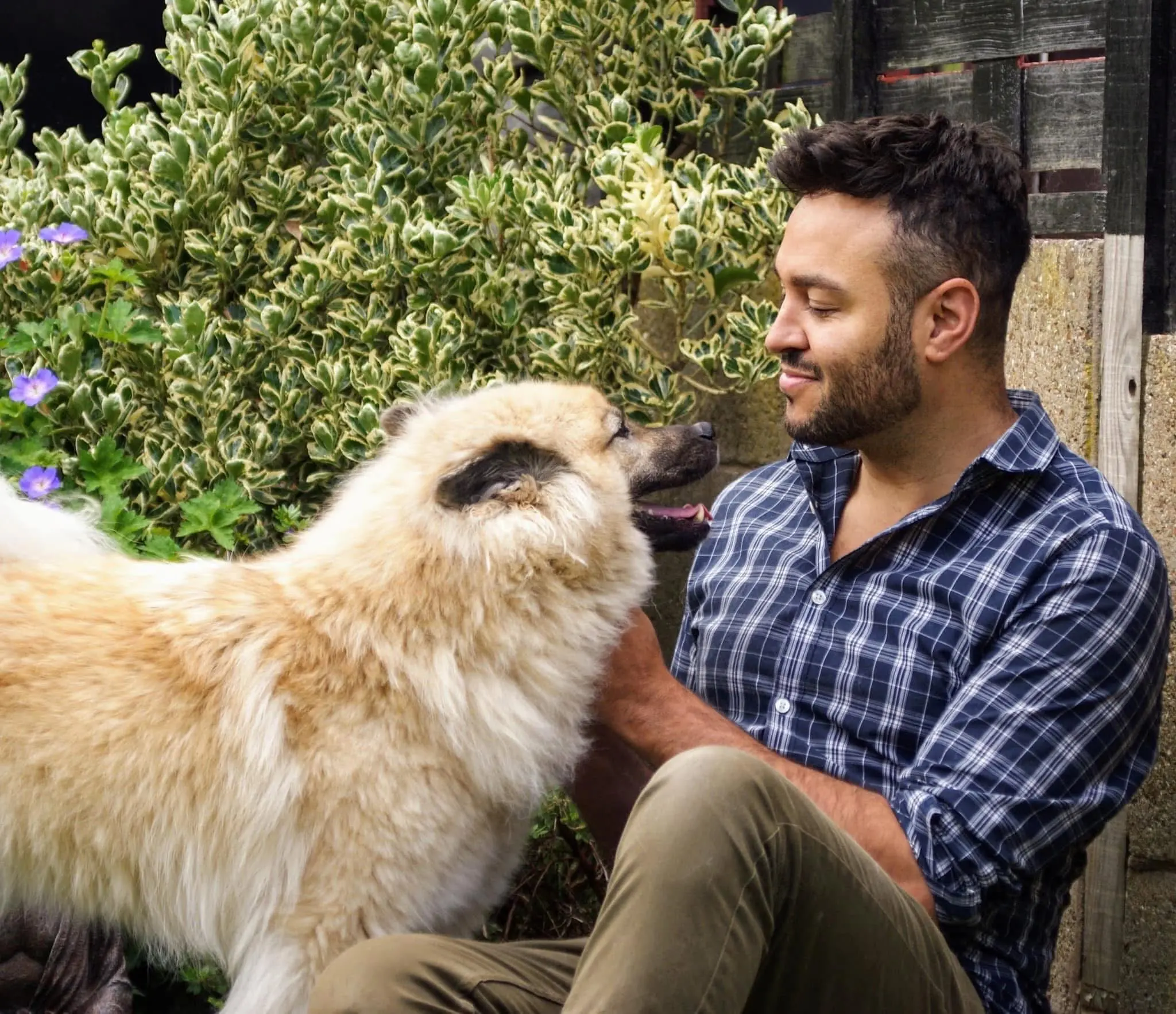
Junior Hudson, 48, from Letchworth, Hertfordshire, became a dog behaviourist after struggling with his own “challenging” puppy and is helping pet owners avoid the harmful advice which once left him feeling desperate.
Junior, who had always loved animals and dreamed of becoming a vet as a child, was a lifelong “cat person”; he had no idea how dramatically his life would change when he adopted his first dog, a Eurasier puppy named Rico, in 2010.
Junior found the youngster’s energetic and challenging behaviour overwhelming and began searching online and through contact with local trainers for ways to help manage him.
But instead of improving, Rico’s behaviour became worse as Junior encountered conflicting and sometimes damaging advice. One even told him that he needed to take on the role of “alpha” by pinning Rico down until the puppy submitted.
Junior said: “I was completely unprepared for how difficult life with a puppy could be. Rico’s behaviour drove me to distraction and, because I was desperate, I reached out to people online who I thought would be able to help.
“One trainer told me to pin Rico down and show him that I was the alpha. I also received other advice that focused on punishment and correction. Thankfully, I realised early on that this didn’t feel right, but the conflicted and confusing experience stayed with me.
“When people follow aversive advice, it does not mean they are bad or uncaring guardians . Often, they are decent people who love their dogs but have been given bad information at a time when they are desperate to see a change.”
Determined to find a kinder and more effective way forward, Junior began studying dog behaviour to maximise his understanding and learned to work with Rico using ethical, non-aversive training techniques.
The experience eventually inspired him to leave his former career behind and become a dog behaviour professional, completing a Level 6 advanced diploma with distinction with the International School of Canine Psychology and Behaviour.
He established Heal The Dog an online educational page, which now has more than 15,000 followers. Junior also partnered with a leading pet insurance company to provide virtual sessions to owners in need.
Junior has since worked with more than 5,000 dogs and in 2024 founded Companion Animal Wellness, a team of ethical behaviourists who put the needs and rights of companion animals first. The company says all its Trustpilot reviews have awarded it five stars.
Rico died two years ago, but Junior says the much-loved dog remains at the heart of everything he does.
He said: “This is all because of Rico. He showed me how frightening and confusing the world can become for both dogs and their guardians when they do not have the right support.
“Dogs don’t need to be dominated or punished. They need to be understood.
“Behaviour is not simply about a dog being ‘good’ or ‘bad’. There is always a reason behind it, and our job is to approach that animal with empathy, kindness, curiosity and science rather than fear or force.”
Junior leads the team of professionals supporting Pet Remedy’s Ask The Professional service, which connects pet owners with qualified trainers, behaviourists and nutrition professionals through virtual consultations.
The initiative has been launched amid concern that owners are being overwhelmed by a flood of conflicting and often unqualified advice online.
Although social media is filled with training videos and quick fixes, the dog training and behaviour industry remains largely unregulated, meaning owners may struggle to distinguish between qualified professionals and self-appointed experts.
Poor advice can make fear, anxiety and other behavioural difficulties worse, potentially damaging the bond between an animal and their family. In the most serious cases, unresolved problems can contribute to pets being surrendered or euthanised.
Pet Remedy, which produces calming products used by pet owners and animal professionals across the UK, developed Ask The Professional in partnership with Companion Animal Wellness.
The service provides evidence-based guidance on dog and cat behaviour and nutrition, helping to bridge the gap between calming products and appropriate professional support.
Junior said: “Living with an animal who is struggling emotionally or behaviourally can feel incredibly lonely. Owners may be embarrassed, exhausted or frightened that they are making everything worse.
“We want them to know that they do not have to solve it alone. Asking for help is not a sign that you have failed your pet. In fact, it can be one of the most loving and responsible things you do.
“A good professional will not judge or blame you. They will listen, look at the whole picture and help you understand what your animal needs in order to feel safer and cope better.”
Andrew Hale, emotional wellbeing expert at Pet Remedy, said the company recognised that many people turned to its products because their animals were already struggling with issues including separation anxiety, fear-based behaviours and environmental stress.
He said: “People are crying out for reliable, ethical advice. We know our customers are often dealing with challenging situations, and it is vital they have access to qualified professionals who can guide them in a supportive and evidence-based way.”
Ask The Professional offers a 20-minute consultation for £24 or a more detailed 45 to 60-minute appointment for £65.
Junior added: “There is rarely an instant fix for behaviour, but with the right advice, patience and understanding, meaningful change is possible.
“Rico taught me that the answer was not to overpower the dog in front of me. It was to become the person he could trust.”
Junior Hudson’s five top tips for owners facing behavioural problems
1. Look for the reason behind the behaviour
Do not dismiss a dog as stubborn, naughty or dominant. Behaviour is communication and may be driven by many elements including fear, pain, frustration, confusion or an unmet need.
2. Rule out pain or illness
A sudden or unexplained change in behaviour should always be discussed with a vet. Pain and physical discomfort can cause irritability, anxiety, withdrawal, sleep disruption or aggression, even when there are no obvious outward signs of illness.
3. Avoid punishment and “alpha” techniques
Do not pin, intimidate, shout at or physically punish your dog. These methods may suppress or worsen behaviour, typically don’t address the underlying emotion and can increase fear while damaging trust. Choose reward-based, non-aversive methods instead.
4. Stop relying on quick fixes online
A short social media video cannot assess your pet’s health, history, home environment or emotional state. Check a professional’s approach, experience, qualifications and be wary of anyone promising an instant cure or advising you to frighten, hurt or dominate an animal.
5. Ask for qualified help early
Do not wait until you are at breaking point. Seeking out early, compassionate support can bring much-needed understanding and prevent a manageable difficulty from becoming a crisis.