
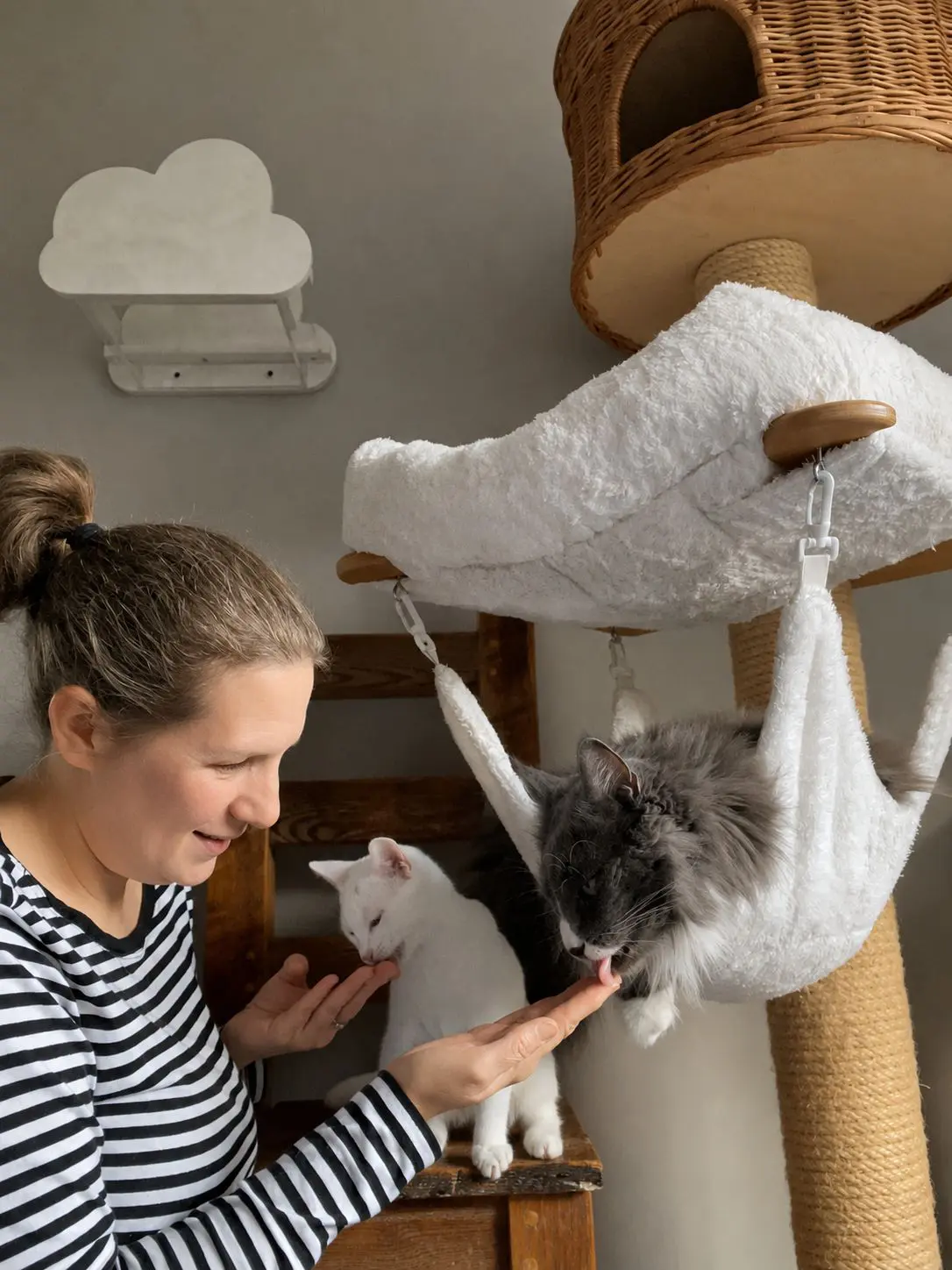
A woman whose first word was “cat” has become one of the experts helping people tackle troubling pet behaviour through a pioneering professional advice service.
Claire Stares, 44, from Portsmouth, is one of the UK’s leading cat behaviour experts and has devoted her career to understanding the often subtle ways felines communicate fear, anxiety and stress.
She is now part of Pet Remedy’s Ask The Professional service, which gives pet guardians free access to trusted, highly qualified animal professionals who can provide reliable guidance on behaviour, health and wellbeing.
Claire is currently the only specialist dedicated exclusively to cats within the service and hopes her involvement will ensure their emotional and behavioural needs are no longer overlooked.
Her fascination with felines began extraordinarily early. Despite growing up in a family of dog lovers and not having a cat of her own, Claire’s first word was “cat”.
As a child, she was obsessed with her neighbour’s Siamese cats and longed for a feline companion of her own. Her wish was finally granted when she adopted her first cat at the age of 15.
She has never looked back, transforming that childhood passion into a career dedicated to improving the lives of cats and the people who care for them.
Claire said: “Apparently my first word was ‘cat’, which was quite remarkable because we didn’t even have one at the time. I grew up surrounded by dog lovers, but I was completely fascinated by cats, particularly my neighbour’s beautiful Siamese cats.
“I finally adopted my first feline companion when I was 15 and that was it. I knew cats would always be an enormous part of my life. I feel incredibly fortunate that I have been able to turn that lifelong fascination into a career.”
Claire holds a postgraduate qualification in clinical animal behaviour, awarded with distinction by the University of Edinburgh.
She also holds the International Cat Care Certificate in Feline Behaviour and has studied with the internationally respected Karen Pryor Academy, completing courses in positive reinforcement training.
Among the most common problems Claire encounters are cats urinating or spraying inside the home and aggression directed towards other cats or people.
But she warns that behaviour which appears deliberately “naughty” or “spiteful” may actually be linked to fear, stress, frustration, inappropriate play or an underlying health problem.
Claire said: “Aggression can have several different causes. Sometimes it is play or predatory behaviour that has been misdirected towards another cat or person, but pain and underlying medical conditions must always be considered.
“Aggression can also be due to fear, frustration, overstimulation or redirected aggression. This can happen when a cat is highly aroused or frightened by a trigger they cannot physically reach, such as seeing a stray cat outside a window.
“Cats are extremely good at disguising pain or discomfort, so what looks like a behavioural problem can sometimes be their way of communicating that something is wrong.”
When a cat begins spraying or soiling inside the home, Claire’s first recommendation is always a veterinary examination.
Once medical causes have been investigated, she takes a detailed history covering the cat’s life, health, home environment and relationships with both people and other animals.
She said: “There is rarely a quick, one-size-fits-all explanation for spraying. We need to understand the individual cat, their social background, their experiences and what is happening in the household.
“The environment can play a huge role. Something that appears insignificant to us, such as tension with another cat or a change in routine, can be deeply stressful for them.”
Claire also cautioned against punishing unwanted behaviour, including squirting cats with water spray bottles.
She said: “Spraying a cat with water might interrupt the behaviour in that particular moment, but it does not address why the cat is doing it.
“Punishment can make the cat feel less safe and damage the relationship and trust between a cat and their caregiver. In the longer term, that additional anxiety may make the original problem even worse.”
The earliest stages of a cat’s life can be particularly important. Poor socialisation, a lack of habituation to environmental sights, sounds and smells, or frightening experiences during kittenhood may influence how an animal responds to people, other cats and unfamiliar situations for years afterwards.
Claire said: “Kittenhood is an incredibly formative period. Positive, carefully managed experiences can help kittens develop into confident adults, while negative experiences at that stage can contribute to behavioural difficulties later in life.
“That is why I hope people will use Ask The Professional not only when they are already facing a serious problem, but also for preventative advice. Getting the right guidance early can make an enormous difference.”
Claire believes cats are frequently misunderstood because signs of stress can be far less obvious than they are in other companion animals.
Rather than displaying overt distress, an unhappy cat may become withdrawn, hide more frequently, alter its eating or grooming habits, or begin toileting outside the litter tray.
She added: “I am very proud to be the cat behaviour expert within Ask The Professional because cats’ needs are still too often overlooked.
“Their behavioural problems and signs of stress do not always manifest in an obvious way, which means they can go unnoticed until the situation becomes much more serious.
“My hope is that the service will help guardians understand their cats better, prevent future problems and improve feline welfare and knowledge across the country.”
Claire’s five top tips for tackling spraying
1. Arrange a veterinary check
Spraying can be linked to pain or an underlying health condition, so always speak to your vet before treating it solely as a behavioural issue.
2. Never punish your cat
Shouting or spraying your cat with water may interrupt the behaviour momentarily, but it can increase anxiety, damage trust and ultimately make the problem worse.
3. Identify possible sources of stress
Consider recent changes to the household, including new pets, visitors, building work, altered routines or unfamiliar cats appearing outside.
4. Provide enough feline resources
In multi-cat homes, offer separate litter trays, food and water bowls, beds, scratching posts, hiding places and elevated resting areas. As a general guide, provide one litter tray per cat, plus one extra.
5. Seek qualified help early
Keep a record of when and where spraying happens, then consult a properly qualified cat behaviour professional. Early advice can stop the behaviour becoming established and help uncover what your cat is trying to communicate.